Synthetic sports flooring has become the preferred choice for modern sports facilities, schools, academies, stadiums, and commercial fitness centres. It offers versatility, durability, and consistent performance for both indoor and outdoor sports. Whether you’re building a basketball court, tennis court, futsal arena, badminton hall, multi-purpose area, or jogging track, synthetic flooring delivers long-term value with minimal maintenance.
This in-depth guide covers everything you need to know about synthetic sports flooring—its types, performance factors, installation methods, costs, lifespan, and how to choose the right system for your sports facility.
What Is Synthetic Sports Flooring?
Synthetic sports flooring refers to man-made flooring systems designed specifically for sports use. These surfaces are engineered to provide:
- Shock absorption
- Slip resistance
- Even ball bounce
- High traction
- Weather resistance (outdoor)
- Long lifespan
- Low maintenance
Common materials used in synthetic floors include polyurethane (PU), acrylic, PVC, EPDM rubber, polypropylene tiles, and synthetic turf.
Types of Synthetic Sports Flooring
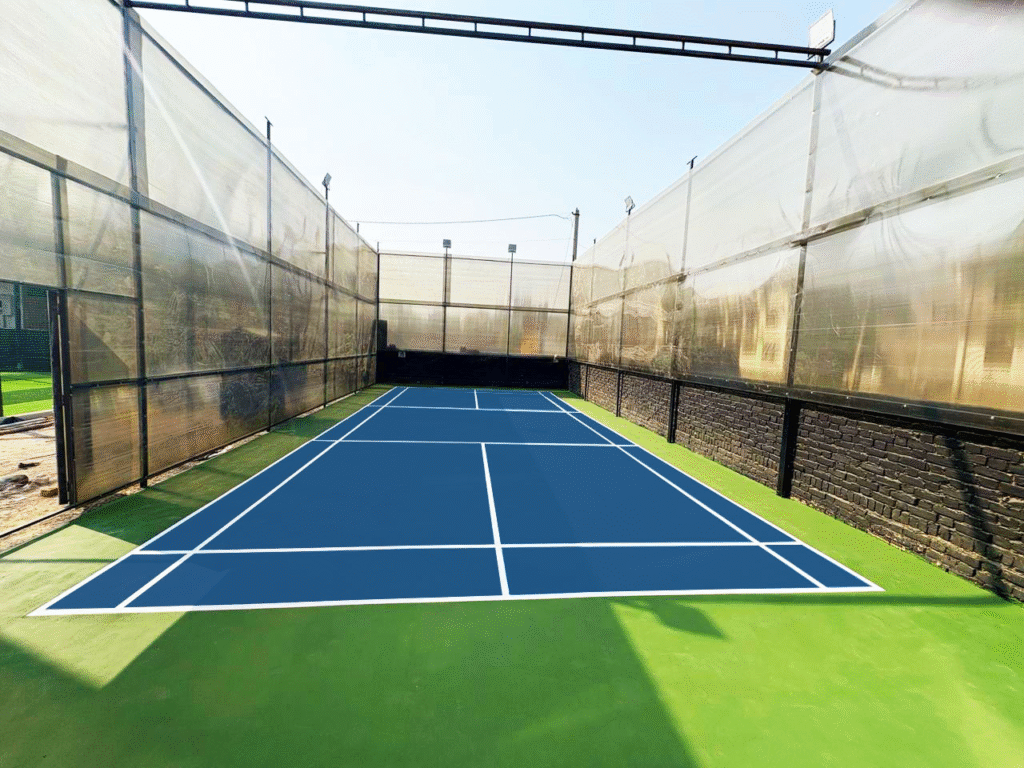
Synthetic flooring comes in multiple systems, each suitable for specific sports and usage levels.
A. PU (Polyurethane) Sports Flooring
PU flooring is a seamless, cushioned indoor sports surface used for badminton courts, basketball courts, gymnasiums, and multi-purpose halls.
Key Features
- Seamless, smooth finish
- Excellent shock absorption
- High durability
- Suitable for professional & recreational play
- Easy cleaning
Common Applications
- Indoor sports complexes
- School sports halls
- Corporate gyms
- Badminton and basketball courts
B. Acrylic Sports Flooring
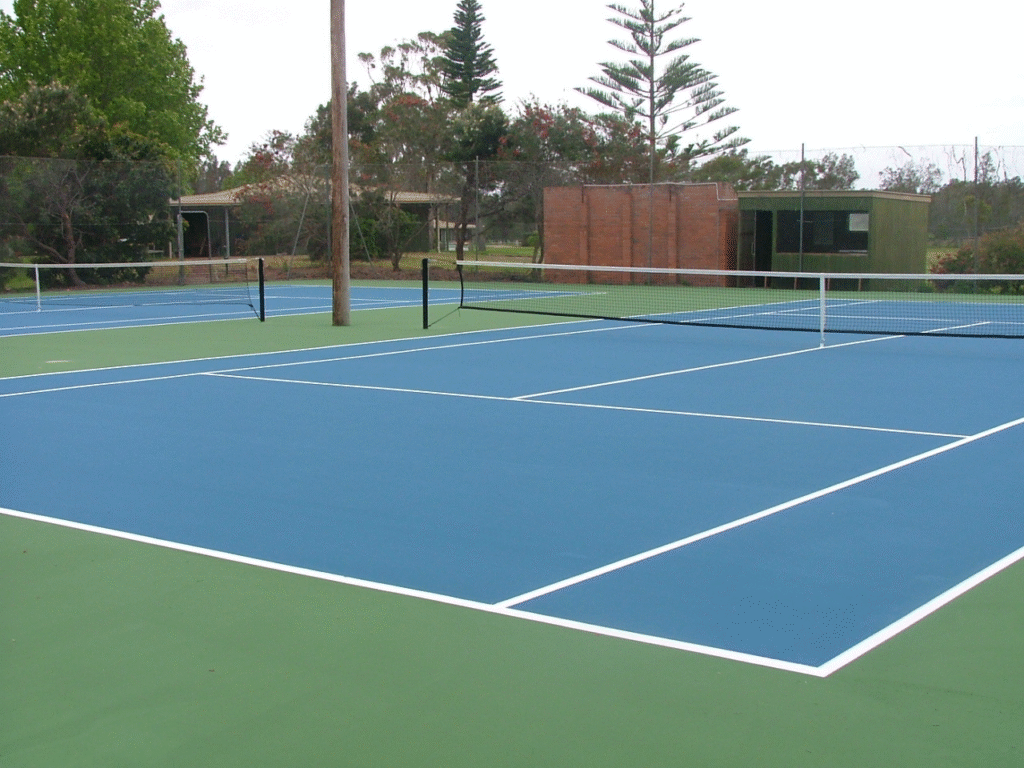
Acrylic flooring is a layered outdoor synthetic surface used for tennis, basketball, volleyball, and multi-use game areas.
Benefits
- UV resistant
- Fast installation
- Skid-free traction
- Long-lasting finish
- Weather-proof
Ideal For
- Outdoor courts
- Tennis academies
- Public parks
- School playgrounds
C. EPDM Rubber Flooring
EPDM (Ethylene Propylene Diene Monomer) flooring is a rubberized surface used in outdoor play areas and athletic spaces.
Features
- High cushioning
- Anti-slip surface
- Child-safe
- Heat & weather resistant
Applications
- Playgrounds
- Running tracks
- Walking paths
- Multi-purpose outdoor areas
D. PVC / Vinyl Sports Flooring
PVC sports flooring is a popular indoor synthetic option for schools, fitness centres, yoga studios, and recreational courts.
Advantages
- Good ball bounce
- Slip-resistant
- Hygienic and easy to mop
- Cost-effective
E. Interlocking PP Tiles
Polypropylene tiles are modular synthetic tiles used for outdoor and indoor multi-sport courts.
Benefits
- Quick installation
- Replaceable tiles
- Great for uneven surfaces
- Superior drainage
Perfect For
- Outdoor basketball courts
- Multi-sport community courts
- School grounds
- Futsal surfaces
F. Synthetic Turf Flooring
Artificial turf is used for football, cricket, futsal, and multi-sport turf grounds.
Pros
- Natural grass-like feel
- Weather independent
- Suitable for heavy usage
- Low maintenance
Benefits of Synthetic Sports Flooring
1. Superior Durability
Withstands constant foot traffic, weather changes, and high-impact movements.
2. Consistent Performance
Reliable grip, bounce, and traction across all seasons.
3. Cost-Effective
Less maintenance compared to traditional surfaces.
4. Quick Installation
Many synthetic floors can be installed within days.
5. Weather Resistance
UV, heat, and rain resistant—perfect for outdoor courts.
6. Customizable
Colors, thickness, cushioning, and line markings can be tailored.
7. Low Maintenance
Requires minimal upkeep and cleaning.
Choosing the Right Synthetic Sports Flooring
Use these factors to pick the right system:
A. Type of Sport
- Basketball → PU / PP tiles
- Badminton → PU / Vinyl
- Tennis → Acrylic
- Football/Futsal → Turf
- Kids Play Area → EPDM Rubber
B. Indoor or Outdoor
Outdoor needs UV-stable materials; indoor needs cushioning and performance layers.
C. Usage Intensity
High-traffic facilities require thicker, more robust systems.
D. Budget
Each flooring type has different price ranges.
E. Maintenance Requirement
Choose according to your ability to maintain the surface regularly.
F. Subfloor Condition
Levelness, moisture, and structural condition influence material selection.
Installation Process of Synthetic Sports Flooring
While each type has a specific methodology, the general process includes:
Step 1: Site Survey
Measurement, subfloor inspection, moisture testing.
Step 2: Subfloor Preparation
Grinding, leveling, patching, crack-filling.
Step 3: Base Layer Installation
Shock pads, rubber mats, or base coats depending on flooring type.
Step 4: Main Flooring Application
Pouring PU, layering acrylic coats, laying vinyl sheets, or installing tiles.
Step 5: Line Marking
Accurate marking for sports such as basketball, tennis, or badminton.
Step 6: Final QC Inspection
Testing bounce consistency, grip, cushioning, and smoothness.
Cost of Synthetic Sports Flooring (General Range)
Pricing depends on material type, thickness, area size, labour, and subfloor work.
| Flooring Type | Cost Range (Approx.) | Use Case |
|---|---|---|
| Acrylic Flooring | Low to medium | Outdoor courts |
| PU Flooring | Medium to high | Indoor halls |
| Vinyl Flooring | Low to medium | Schools, gyms |
| EPDM Rubber | Medium | Play areas, tracks |
| PP Tiles | Medium | Outdoor multi-sport |
| Synthetic Turf | Medium | Football, futsal |
(Actual cost varies based on city, groundwork condition, and custom specifications.)
Lifespan & Durability
Average lifespan:
- PU Flooring: 8–12 years
- Acrylic Courts: 4–7 years
- PP Tiles: 8–10 years
- Vinyl Flooring: 5–8 years
- EPDM Rubber: 8–12 years
- Artificial Turf: 4–6 years
Proper maintenance extends life significantly.
Maintenance Guidelines
Indoor Synthetic Floors
- Sweep and mop regularly
- Avoid heavy dragging objects
- Use recommended cleaning solutions
Outdoor Synthetic Floors
- Remove debris
- Prevent water stagnation
- Recoat / repaint when required
Turf Maintenance
- Brushing
- Sanitisation
- Infill top-up
Common Problems & How to Avoid Them
- Peeling or bubbles → caused by poor subfloor prep
- Cracks → temperature fluctuations or weak base layer
- Uneven bounce → improper cushioning or slope
- Color fading → UV damage (use UV-resistant topcoats)
- Waterlogging → inadequate drainage planning
Professional installation helps avoid these issues completely.
Conclusion
Synthetic sports flooring is one of the most reliable, durable, and versatile options for modern sports facilities. With multiple systems like PU, acrylic, vinyl, EPDM, PP tiles, and turf, you can create safe, high-performance courts for any sport and any environment.
What is synthetic sports flooring?
Synthetic sports flooring refers to man-made, engineered flooring systems designed for indoor and outdoor sports. These floors are made from materials like acrylic, polyurethane, EPDM, vinyl, and rubber to offer durability, shock absorption, traction, and consistent performance.
What are the different types of synthetic sports flooring?
Common types include:
Acrylic Sports Flooring
Polyurethane (PU) Flooring
EPDM Rubber Flooring
Vinyl (PVC) Sports Flooring
Interlocking Modular Tiles
Each type suits different sports like tennis, basketball, badminton, volleyball, skating, running tracks, and multi-purpose courts.
Which synthetic flooring is best for outdoor sports?
Acrylic flooring and EPDM flooring are the most popular choices for outdoor sports because they withstand UV rays, rain, heat, and heavy foot traffic. They also provide anti-slip properties and long-term durability.
Which synthetic flooring is ideal for indoor sports?
PU (polyurethane) and vinyl sports flooring are preferred indoors due to their cushioned layers, smooth finish, shock absorption, and ball bounce consistency.
How long does synthetic sports flooring last?
With proper maintenance, synthetic sports flooring typically lasts:
Acrylic: 5–8 years
PU: 8–12 years
Vinyl: 8–10 years
EPDM: 6–10 years
Longevity depends on usage, maintenance, and weather exposure.
Is synthetic sports flooring waterproof?
Most synthetic floorings—especially acrylic and EPDM—are water-resistant. They do not absorb water, making them suitable for outdoor courts exposed to rain.